Common Renovation Pitfalls South Florida Homeowners Should Avoid
Most renovation disasters aren't caused by a bad contractor or bad luck — they're caused by decisions made too early, without enough information, in the first few weeks of a project. The most common renovation pitfalls in South Florida are starting construction before the design is finalized, underestimating permitting timelines, budgeting only for visible finishes, and skipping HOA or municipal approvals that later halt work entirely.
Every one of these pitfalls is avoidable, and every one of them is more common in South Florida than homeowners expect, thanks to the region's building codes, coastal permitting requirements, and dense patchwork of HOA rules. Here's what causes the most trouble, and how to plan around it before you break ground.
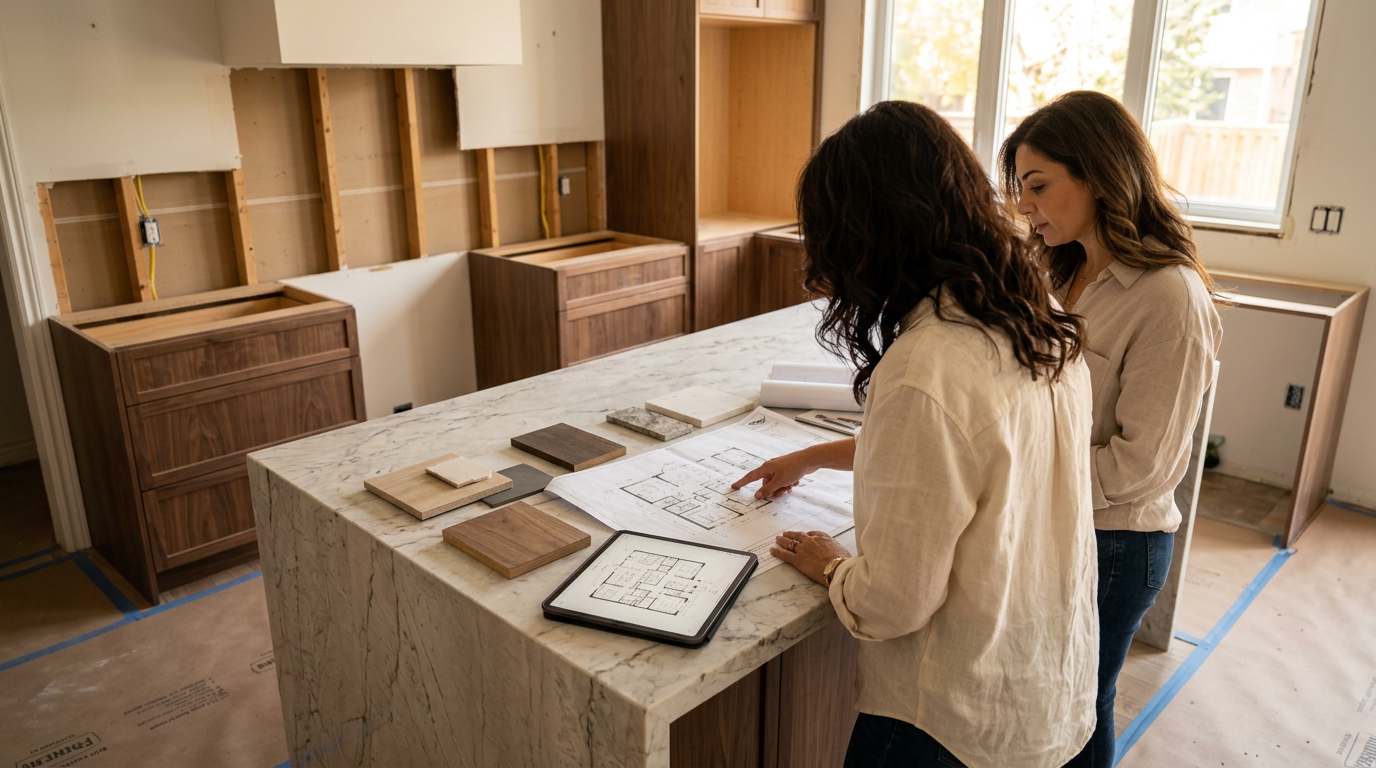
Krissy Rey Design - Kitchen Remodeling Project
What are the most common renovation mistakes homeowners make?
The most common renovation mistakes are ordering materials or starting demolition before the design is fully resolved, budgeting only for finishes instead of the full project (labor, permits, structural work, and contingency), and choosing a contractor before there's a finished plan for them to price accurately. Each of these mistakes compounds the others, which is why early-stage decisions matter more than almost anything that happens later in the project.
The pattern shows up in a few recognizable ways:
Demolition before design. Tearing out a kitchen or bathroom before finishes, fixtures, and layout are finalized feels like progress, but it locks in decisions under time pressure — with a contractor waiting and a family living without a functioning room, few homeowners make their best choices in that window.
Budgeting for what you can see. A finishes-only budget covers tile, cabinetry, and fixtures, but misses labor, design fees, permitting costs, structural or plumbing work behind the walls, and site conditions that only appear once demolition starts. A complete renovation budget accounts for all of it, plus a contingency reserve — most experienced contractors recommend setting aside an additional 10–20% of the project budget for the unexpected.
No ranked priorities. When a project doesn't have clear priorities going in, budget and space pressure force decisions mid-project, and the result is often a compromise on the thing that mattered most, in favor of something that didn't.
Over-improving for the neighborhood. A luxury-grade renovation can outpace what a specific street or building supports in resale value. This matters less for homeowners planning to stay long-term, but it's worth discussing openly with a designer who knows the local market.
Prioritizing looks over how the room actually functions. A kitchen or bath that photographs beautifully but doesn't work for how the household actually lives — storage, traffic flow, daily use — is a common regret that shows up only after the renovation is finished and lived in.
How do permitting and HOA rules cause the biggest delays in South Florida?
Permitting is where more South Florida renovations lose time than any other single factor. In the Boca Raton area, standard permitting runs roughly 5 to 7 weeks, but coastal properties, historic districts, or HOA-governed communities can push that to 12 to 16 weeks — and pulling permits late, or assuming HOA approval covers city requirements (or vice versa), is one of the most common and costly mistakes homeowners make.
A few specifics worth planning around:
HOA approval and city permits are separate processes. Many South Florida homeowners assume one covers the other. It doesn't. Both are typically required, on their own timelines, and skipping either one can halt work mid-project.
Unpermitted work carries real risk. Beyond fines, unpermitted renovations can complicate a future sale, trigger forced removal of completed work, and create issues with insurance claims down the line.
Coastal and flood-zone properties face extra review. Wind load requirements, flood elevation rules, and impact-glass code compliance add review steps that inland projects don't face, and those steps take time regardless of how simple the visible renovation looks.
Documentation quality affects speed. Clearly labeled, properly scaled plans submitted the first time move through review faster than incomplete submissions that bounce back for correction — another reason a finished design, not a rough sketch, should go in with the permit application.
A pattern we see often: a homeowner starts a kitchen renovation on a tight timeline, assumes permitting will move quickly, and has the contractor begin work before permits are fully approved. When the inspection catches up to the work, the project stalls — sometimes for months — while corrections are made and re-submitted. What should have been a straightforward renovation turns into a project that drags well past its original timeline and budget, entirely because of a step that should have happened first.
How can a full-service designer help you avoid these pitfalls?
A full-service designer prevents most of these pitfalls by finishing the design, materials, and budget before construction starts, coordinating the permitting and approval process alongside the design timeline, and acting as the single point of accountability across every trade and approval body involved. That structure removes the guesswork that causes rushed decisions, budget surprises, and permitting delays in the first place.
In practice, that means:
A finished plan exists before any contractor bids the job, so pricing is accurate and comparable.
Permitting and HOA submissions happen in parallel with design finalization, not after construction has already started.
The budget includes labor, permits, and contingency from day one — not just the visible finishes.
One person is tracking lead times, approvals, and inspections, so nothing falls through the gap between contractor, HOA, and city.
Frequently Asked Questions
What's the single biggest renovation mistake homeowners make? Starting construction or ordering materials before the design is fully finalized. Nearly every other common mistake — budget overruns, permitting delays, rushed decisions — traces back to this one.
How much contingency should I budget for a renovation? Most experienced professionals recommend reserving an additional 10–20% of the total project budget for unexpected costs, on top of the finishes and labor estimate.
Do I need a permit for a cosmetic renovation, like new cabinetry or flooring? It depends on scope. Purely cosmetic work often doesn't require a permit, but anything involving plumbing, electrical, structural changes, or window replacement typically does — confirming this before work starts avoids costly corrections later.
Does HOA approval replace the need for a city building permit? No. HOA approval and municipal permitting are separate processes with separate requirements, and most South Florida renovations need both.
How early should I start the permitting process relative to my desired start date? Given permitting timelines of 5 to 16 weeks depending on the property and jurisdiction, permitting should begin as soon as the design is finalized — well before you expect construction to start, not after.
Ready to start your renovation without the guesswork? Schedule a design consultation and we'll build a complete plan — design, budget, and permitting strategy — before a single wall comes down.
Krissy Rey Design offers full-service interior design for seasonal residents, out-of-state buyers, and busy professionals throughout South Florida, including Boca Raton, Delray Beach, Coral Springs, and Parkland.