Should You Hire a Designer or a Contractor First for a Kitchen Remodel?
Quick answer: For any kitchen remodel that changes the layout, plumbing, electrical, or cabinetry, hire the designer first — the drawings and selections are what a contractor actually prices against. Here's why skipping that step leads to change orders, and the one case where starting with a contractor is fine.

Kitchen Remodel - Krissy Rey Design
If you're remodeling a kitchen in Boca Raton, Delray Beach, Coral Springs or Parkland, the first call you make will shape the entire project — and most homeowners make it in the wrong order. Here's how to decide who to hire first, what actually goes wrong when you start with a contractor, and when it's genuinely fine to skip the designer.
Should You Hire a Designer or a Contractor First for a Kitchen Remodel?
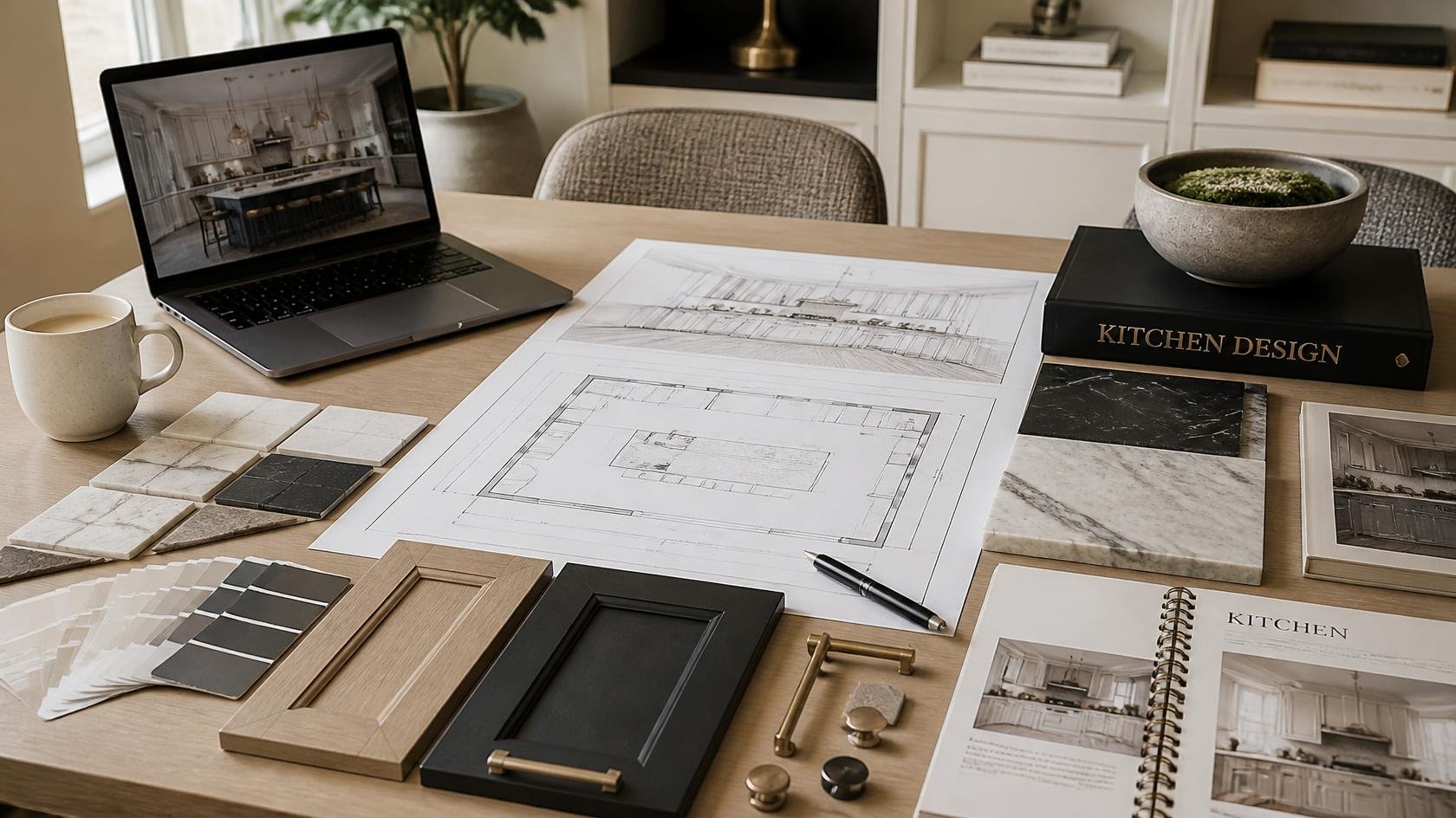
For any kitchen remodel that changes the layout, plumbing, electrical, or cabinetry, hire the designer first. Design decisions and product selections need to happen before demolition or ordering, because the drawings and finish selections are what a contractor actually prices — without them, you're asking for a guess, not a bid.
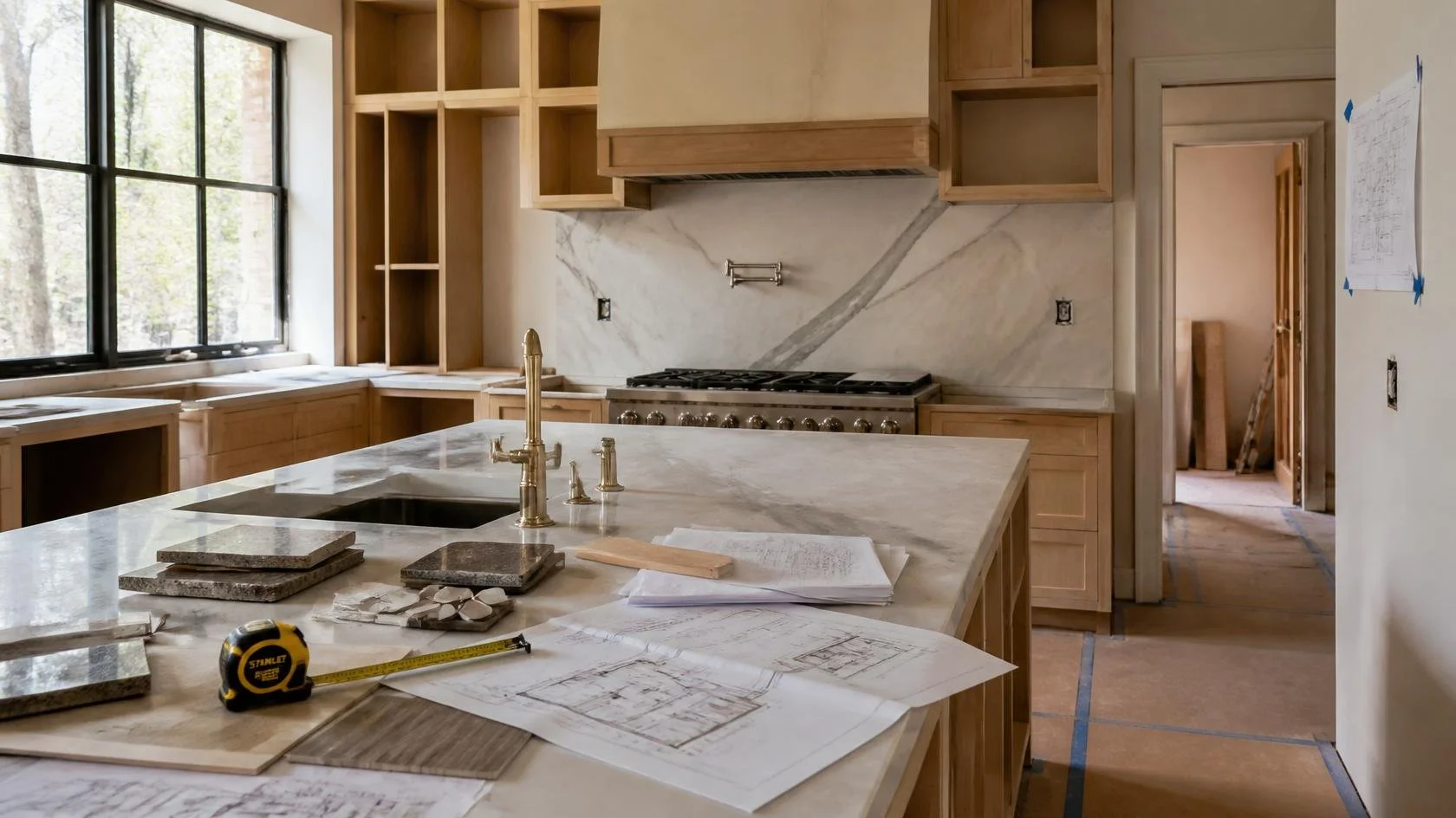
This isn't a formality. A kitchen remodel involves dozens of interdependent decisions: where the island sits relative to plumbing lines, whether a wall comes down, what cabinet depth works with the new appliance panel, where under-cabinet lighting needs rough-in wiring. A designer resolves those decisions on paper, produces a complete set of drawings and selections, and then a contractor bids against something concrete. Skip that step, and the contractor is pricing a moving target.
The only real exception is a cosmetic refresh with no layout changes — new paint, new hardware, a countertop swap on an existing footprint. That kind of project can start with a contractor, because there's nothing to design beyond a finish selection.
Kitchen Remodel - Krissy Rey Design
What Happens If You Hire a Contractor Before the Design Is Finalized?
Hiring a contractor before the design is set typically leads to a vague initial estimate followed by a string of change orders as decisions get made mid-construction — and each change order adds cost and time. The contractor isn't wrong to charge more; the scope genuinely changed after they priced it.
This plays out in predictable ways. A contractor gives a number based on "standard" finishes because nothing has been selected yet. Once framing or demo starts, the homeowner realizes they want a different cabinet configuration, a moved outlet, or a different backsplash height — all reasonable requests, but each one now costs more than it would have if it had been decided during the design phase, because labor and materials already committed to the original plan have to be undone.
The financial gap is real. Homeowners who start construction before design decisions are locked in commonly see project costs run well above the original bid, almost entirely through change orders that a finished design package would have priced correctly from day one.
When Is It Okay to Skip the Designer and Start With a Contractor?
Skipping the designer makes sense when the kitchen's layout, plumbing, and electrical are staying exactly where they are, and the project is limited to surface-level updates: repainting cabinets, swapping hardware, replacing countertops on the existing footprint, or updating a backsplash. In those cases, a contractor (or the cabinet or countertop company itself) can scope and price the job directly, because there's no spatial or structural decision-making involved.
The moment a project involves moving an island, relocating a sink or range, opening a wall, or reconfiguring cabinetry, the calculus changes — design needs to come first, even if the homeowner feels like they "already know what they want." A clear vision isn't the same as a buildable plan, and a contractor still needs drawings and specifications to bid accurately.
Realistic Timeline: Design First, Then Construction
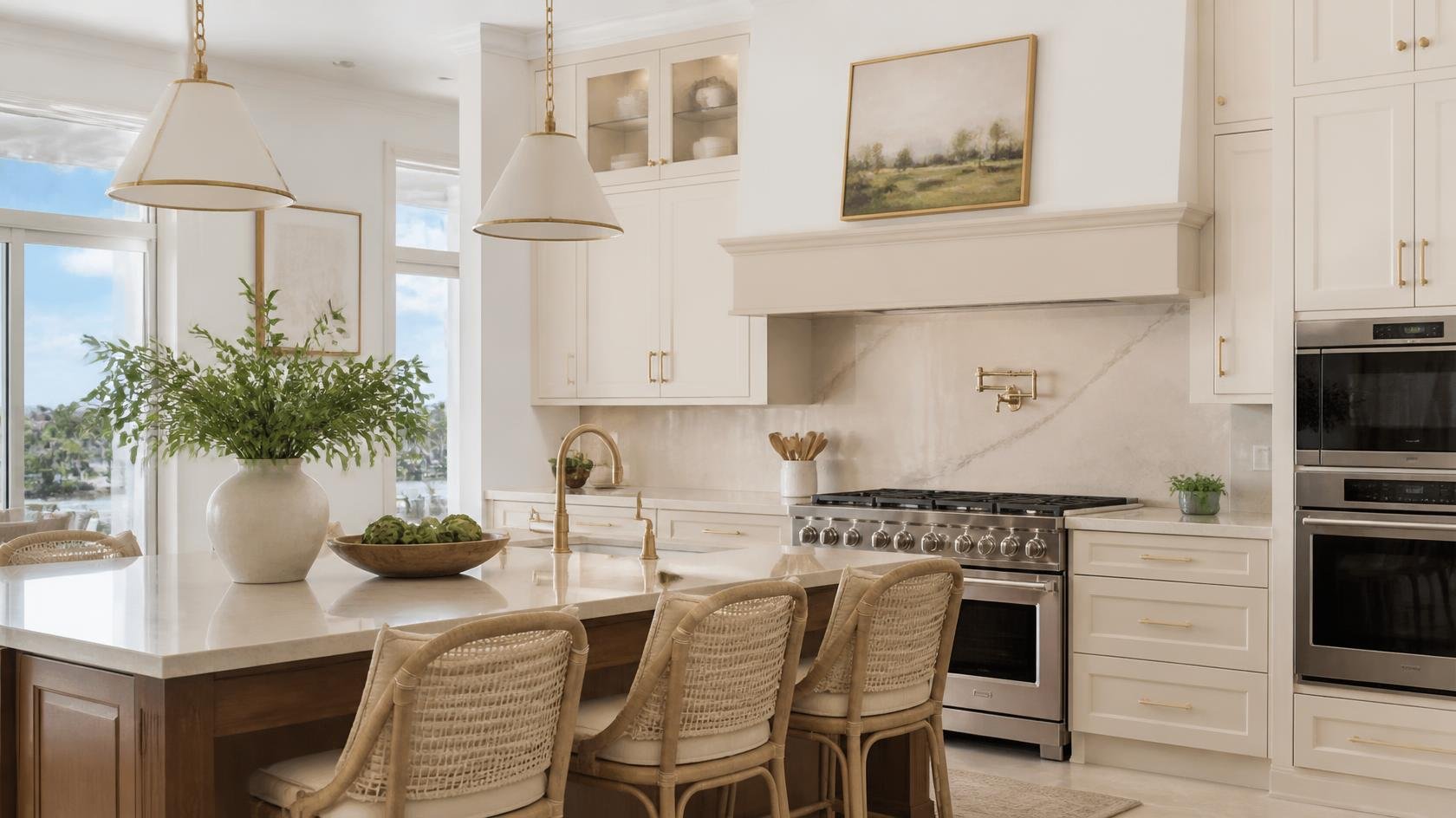
For a custom kitchen remodel, plan on roughly 6 to 12 weeks from the first design meeting to a finished construction drawing set, finalized selections, and a signed cabinetry order. Premium cabinet lines then need 8 to 16 weeks of production lead time before they ship, which is why the design phase has to happen well before any contractor breaks ground — not in parallel with it.
Kitchen Remodel - Krissy Rey Design
A realistic scenario: a homeowner in Boca Raton wants to remove a wall between the kitchen and dining room and add a larger island. They bring in a designer first, who works through the layout, appliance placement, plumbing relocation, and cabinetry selections over about eight weeks. Only once that package is complete does a contractor bid the job — against finished drawings, not a verbal description. The bid comes in close to the final cost, because there's nothing left to decide once construction starts.
Internal Links to Explore Next
Full-service interior design — see how design and remodel coordination works from concept to installation
Schedule a consultation — start with a design conversation before you call a contractor
Delray Beach interior designer — location-specific services and portfolio
Kitchen Remodel - Krissy Rey Design
Frequently Asked Questions
Should I hire a kitchen designer or a general contractor first? Hire the designer first for any remodel that changes the layout, plumbing, electrical, or cabinetry. The design package — drawings and finish selections — is what allows a contractor to bid accurately. Skipping this step almost always leads to a vague estimate and costly change orders later.
How long does the design phase take before a contractor can start? Plan on 6 to 12 weeks from the first design meeting to a complete set of drawings, finalized selections, and a signed cabinetry order. Premium cabinetry then needs another 8 to 16 weeks to arrive, so construction typically doesn't begin until several months after the design process starts.
Can I hire a design-build firm instead of separate designer and contractor? Yes. A design-build firm handles both roles under one contract, which can streamline communication and reduce the risk of design and construction being out of sync. The same principle still applies: design and selections should be finalized before major construction work begins.
What's the risk of starting construction before the design is finished? Every decision made mid-construction — a moved outlet, a different cabinet configuration, a changed finish — becomes a change order, which costs more than the same decision made during design. Projects that start construction early commonly end up well over their original bid for this reason.
Do I need a designer for a small kitchen update like new paint or hardware? Not necessarily. If the layout, plumbing, and electrical are staying the same and the project is purely cosmetic, a contractor or the product vendor can typically scope and price it directly without a full design phase.
Ready to start your kitchen the right way?Book a design consultation before you call a contractor, and we'll build a complete plan — layout, selections, and drawings — so your Boca Raton, Delray Beach, or Parkland kitchen remodel gets an accurate bid the first time.