Japandi Interior Design: Does the Trend Work in a South Florida Home?
Quick answer: Japandi's neutral, natural-material aesthetic suits South Florida's light beautifully, but its signature rattan and linen need moisture-resistant substitutes to hold up against the region's humidity and UV. Here's what the style actually is, and how to adapt it so it lasts in this climate.
Japandi has become one of the most-searched interior design styles of the year, and it's easy to see why: the calm, uncluttered look photographs beautifully. But South Florida's climate — heavy humidity, intense UV, and salt air — treats natural materials very differently than a showroom in Copenhagen or Kyoto. Here's what Japandi actually is, whether it holds up in a South Florida home, and how to adapt it so it does.
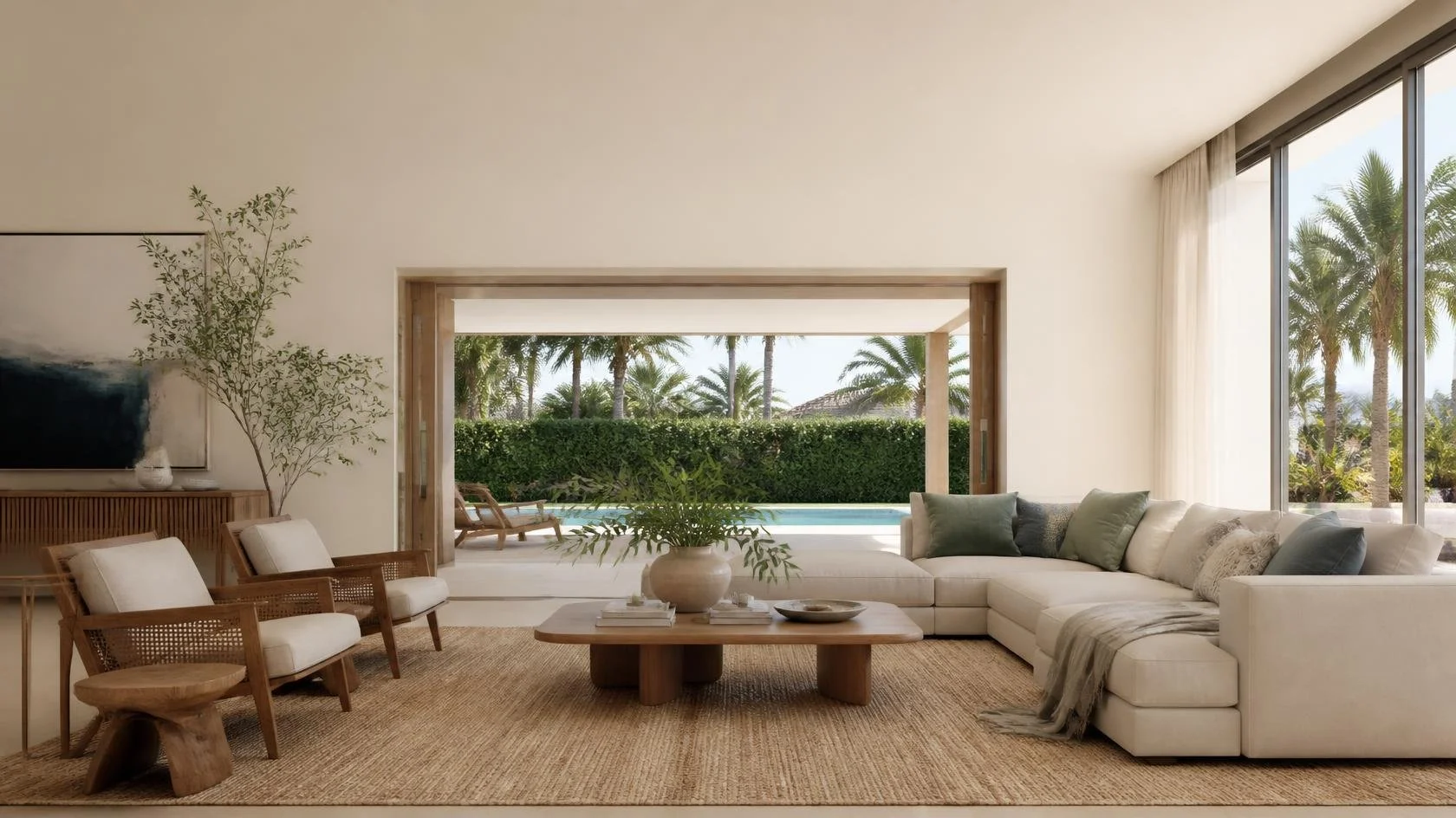
Japandi style South Florida Living Room - Krissy Rey Resign
What Is Japandi Interior Design?
Japandi is an interior design style that blends Japanese wabi-sabi — the appreciation of natural imperfection — with Scandinavian hygge, or cozy functional minimalism. The result is a neutral, uncluttered aesthetic built on natural materials like light wood, linen, stone, and rattan, where every object earns its place and nothing is purely decorative.
In practice, that means clean-lined furniture in light oak or ash, warm neutral and earth-toned palettes (think charcoal, cedar, and increasingly terracotta and honey-toned wood as the style has evolved), handmade ceramics with organic glazes, and a deliberate sense of visual quiet. It's the opposite of a maximalist, heavily patterned look — Japandi rooms feel edited, not empty.
Does Japandi Work in South Florida's Climate?
Japandi's aesthetic translates well to South Florida — the neutral palette and natural materials suit the region's light beautifully — but several of its signature materials need to be substituted or treated differently, because Florida's humidity and UV exposure are far more aggressive than the climates Japandi originated in.
Florida runs 70 to 90 percent relative humidity for much of the year, with UV radiation roughly 20 to 30 percent higher than northern states, plus salt air in coastal communities. Two of Japandi's defining materials struggle under those conditions. Natural rattan and untreated wicker absorb ambient moisture, which can lead to mold, mildew, and structural softening over time — a real problem in an open, humid Florida room, even one that's climate-controlled but near sliding doors or a lanai. Heavy linen upholstery has the same issue: in high humidity, thick natural-fiber cushion fill can hold moisture long enough to develop mildew that's difficult to fully reverse.
None of this means Japandi is a bad fit — it means the materials need to be chosen deliberately rather than pulled straight from a Pinterest board photographed in a dry climate.
How Do You Adapt Japandi Materials for South Florida?
The adaptation is straightforward: keep the Japandi palette and proportions, and swap the moisture-vulnerable materials for versions engineered to handle humidity. Synthetic or resin rattan mimics the look of natural rattan almost exactly but resists moisture and mildew, making it the practical choice for anything near windows, lanais, or humid interior zones. Light woods with a sealed, low-sheen finish hold up better than raw or oiled wood in humid rooms — but avoid high-gloss lacquers, which trap moisture underneath the surface and eventually peel or bubble.
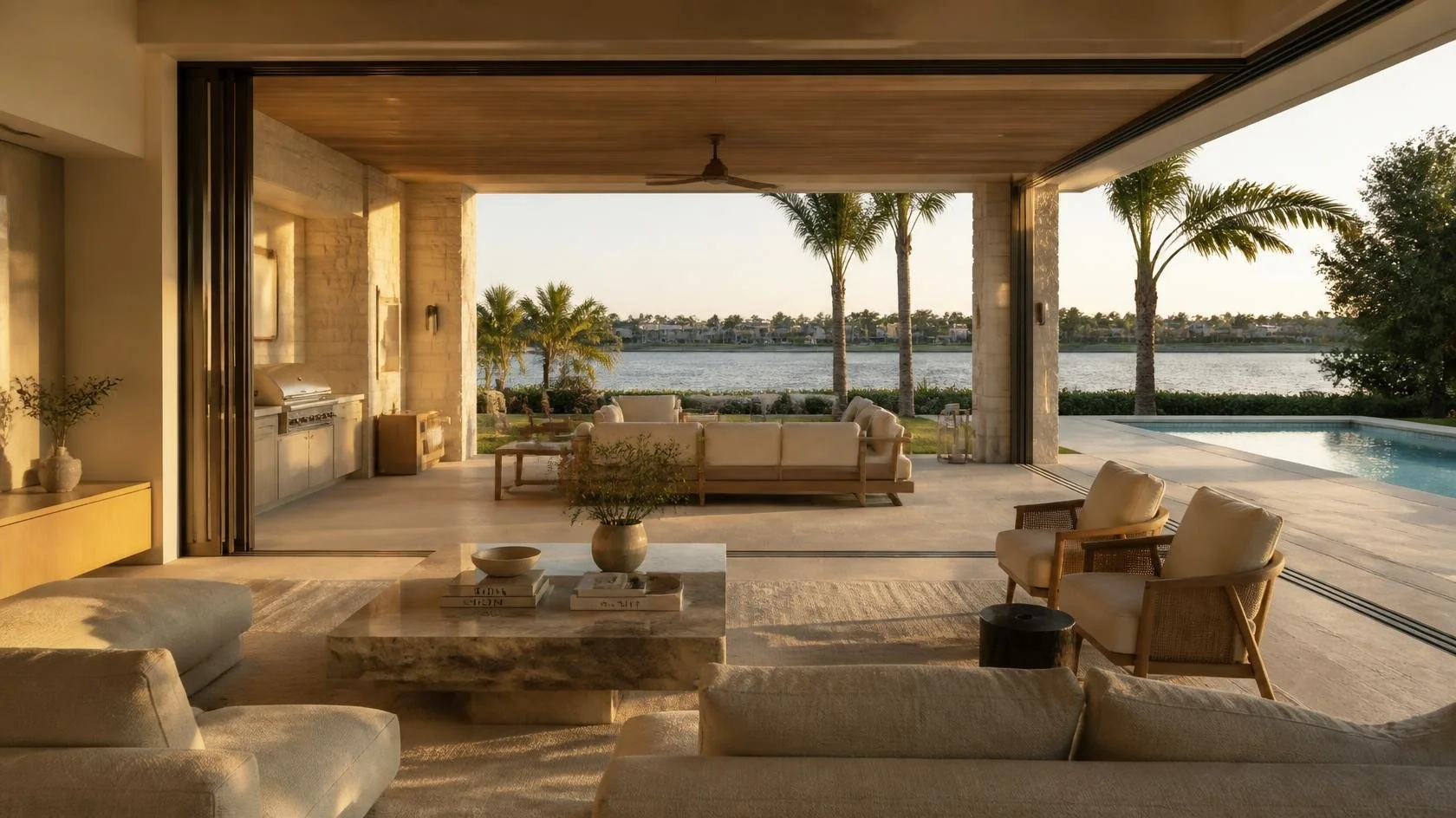
Japandi style indoor-outdoor South Florida space - Krissy Rey Design
For upholstery, look for performance linen-look fabrics or tightly woven natural fibers with a moisture-resistant backing rather than traditional heavy linen, especially on pieces that sit near sliding doors or in sunrooms. Stone, concrete, and ceramic — all core Japandi materials — perform well in Florida with no adaptation needed, since they're naturally moisture-tolerant.
Full climate control also matters more than the style itself. A Japandi room in a fully conditioned interior space, away from direct humidity exposure, can often use more traditional materials safely; a Japandi-styled lanai or three-season room needs the outdoor-grade substitutions almost across the board.
Color and light are worth planning around too. Japandi's 2026 evolution leans warmer than its earlier, starker iterations — honey-toned wood, aged brass hardware, and terracotta accents alongside the traditional charcoal and cedar. That warmer palette happens to suit South Florida particularly well, since it softens the starkness that can feel cold under the region's intensely bright daylight. Where a purely gray-and-white Scandinavian scheme can feel flat or even harsh in direct Florida sun, the warmer, earthier Japandi palette holds its character throughout the day. Layered, adjustable window treatments still matter, both to manage glare and to protect natural-fiber textiles and wood tones from UV fading over time.
It's also worth thinking about where Japandi's "nothing purely decorative" philosophy intersects with durability. Because the style relies on fewer, more considered pieces rather than layers of pattern and accessories, each material choice carries more weight — a single vulnerable rattan bench or linen sofa is far more noticeable, and more costly to replace, than it would be in a busier, more maximalist room. That's another reason it's worth having a designer vet material specs against your specific space (proximity to windows, air conditioning zones, indoor-outdoor flow) rather than ordering directly from a catalog photographed in a different climate.
A realistic scenario: a homeowner in Parkland wants a Japandi-inspired primary bedroom that opens onto a covered balcony. The core palette — light oak bed frame, linen-look bedding, ceramic lamps, a woven bench — stays true to the aesthetic, but the woven bench uses resin rattan instead of natural rattan, and the linen-look upholstery is a performance fabric rather than raw linen, because the space sits within a few feet of a sliding door that's regularly opened to the humid outdoor air. The room reads as authentically Japandi; the materials are simply chosen for where they'll actually live.
Internal Links to Explore Next
Our Services — for a whole-home Japandi or modern design project, from Design Masterplan to Signature Bespoke
Designed to Last: A Thoughtful Approach to Sustainable Interiors in South Florida — more on natural materials built for this climate
Schedule a consultation — talk through whether Japandi fits your space and climate
Parkland Interior Designer — location-specific services and portfolio
Frequently Asked Questions
What is Japandi design, in simple terms? Japandi blends Japanese wabi-sabi (the beauty of natural imperfection) with Scandinavian hygge (cozy, functional minimalism). It shows up as a neutral, natural-material palette — light wood, linen, stone, ceramics — with clean lines and very little pure decoration.
Is Japandi a good fit for a South Florida home? Yes, with adjustments. The aesthetic and palette suit Florida's light well, but natural rattan and heavy linen need to be substituted with moisture-resistant versions, since Florida's humidity can cause mold and mildew in untreated natural fibers.
What Japandi materials should I avoid in a humid climate? Untreated natural rattan and wicker, high-gloss wood finishes, and heavy raw linen upholstery are the biggest risks. All three either trap or absorb moisture, leading to mold, mildew, or peeling finishes over time in a humid environment.
Can I use Japandi design on a lanai or Florida room? Yes, but lean more heavily on the substitutions — resin rattan instead of natural, sealed low-sheen wood instead of raw wood, and performance fabrics instead of traditional linen — since these spaces have more direct humidity exposure than a fully conditioned interior room.
Does Japandi work with South Florida's bright, harsh daylight? Generally well. Japandi's neutral, muted palette and matte finishes handle strong daylight better than high-gloss or heavily saturated color schemes, though window treatments are still worth planning for glare and UV fading on natural-fiber textiles.
Curious whether Japandi fits your space? Schedule a consultation and we'll show you how to bring the look into your Boca Raton, Delray Beach, Coral Springs or Parkland home with materials built to actually last in South Florida's climate.
Krissy Rey Design offers full-service interior design for seasonal residents, out-of-state buyers, and busy professionals throughout South Florida, including Boca Raton, Delray Beach, Coral Springs, and Parkland.