What Interior Design Really Costs (And How To Budget Without Surprises)
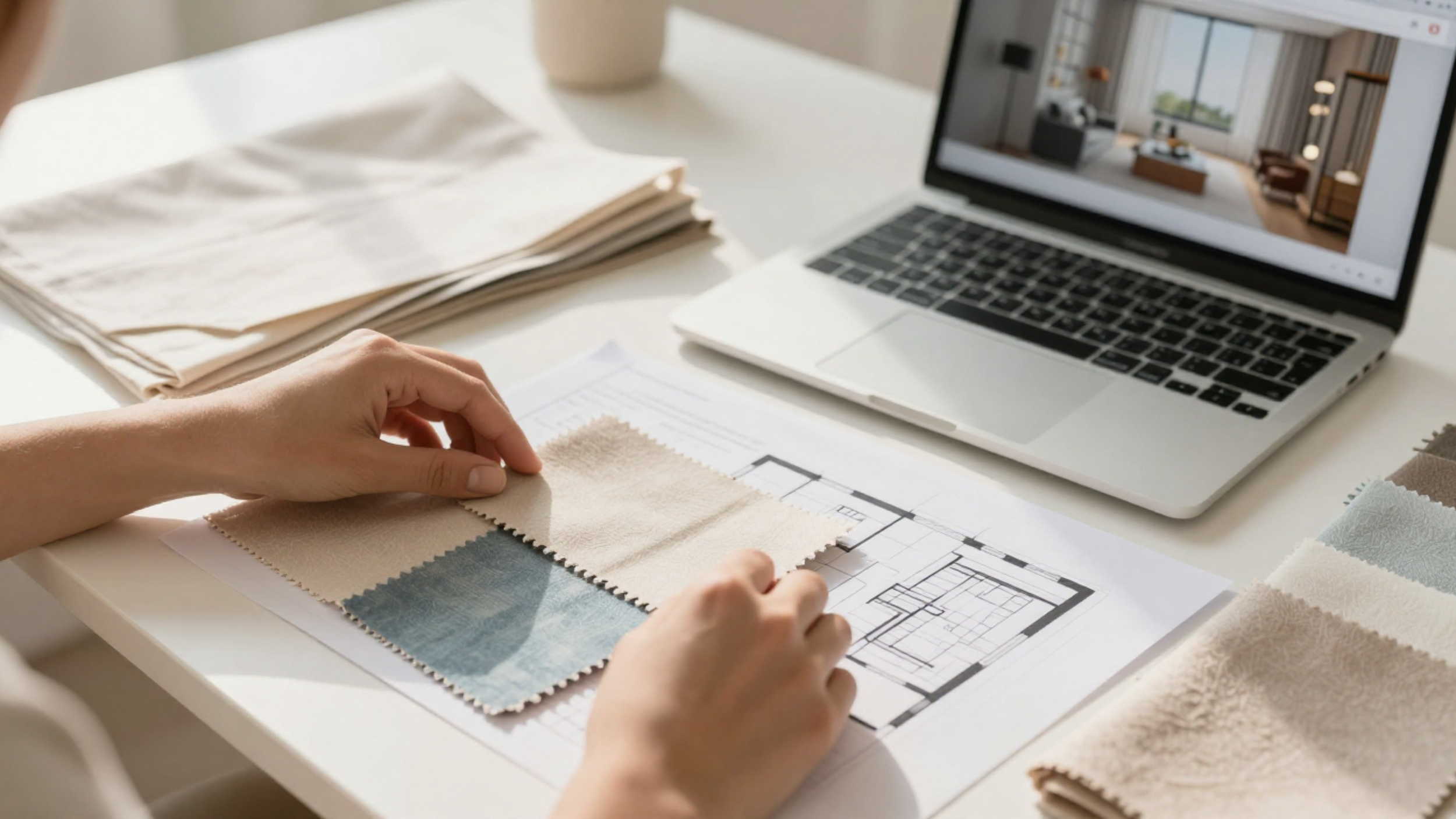
If you’ve ever tried to budget for an interior design project and felt like you were guessing, you’re not alone. The biggest disconnect between homeowners and designers is almost always the same: cost. This guide breaks down how budgets usually work, what drives them up or down, and how to avoid the most common (and expensive).
The budgets homeowners actually bring to the table
Most residential clients come in with a rough number in mind — a “this feels reasonable” budget rather than a line-by-line plan. In practice, these starting points usually cluster around a few project types: single-room refreshes, furnished rooms, partial-home updates, full-room renovations, and full-home or luxury projects.
A typical spread might look like this:
Single room refresh or light furnishing: around $8,000–$25,000.
One to two well-furnished rooms: around $25,000–$50,000.
Strong mid-range room or partial home: around $50,000–$75,000.
Renovation-plus-furnishing (kitchen or bath + finishes): $75,000–$200,000.
Full-home or high-end custom work: $200,000+.
Within those ranges, the budget usually breaks down into three big buckets: furnishings, labor, and materials. Furnishing-led projects are heavier on furniture and decor, while renovation-heavy projects shift more toward labor and construction materials.
The single factor that moves the budget most
Is it square footage, materials, or something else? The answer is: scope. Once a project goes beyond “new furniture and styling” and starts moving walls, reworking plumbing/electrical, or fixing hidden conditions, the budget jumps quickly.
Square footage matters, but scope is what unlocks extra trades, permits, engineering, and the kinds of change orders that drive costs up. A small kitchen or bath with structural changes can cost more per square foot than a larger, simple room where the footprint stays the same.
A simple rule of thumb:
The more you change layout and systems, the more labor and materials dominate.
The more you focus on furnishings and finishes, the more the budget is driven by what you buy rather than how it’s installed.
The biggest misconception about interior design cost

The misconception designers correct most often is the idea that hiring a designer automatically makes the project more expensive. Many homeowners assume the design fee is “extra” rather than seeing it as a tool that can save them money and prevent waste.
In reality, the cost of a designer’s time is often offset by better decisions and fewer mistakes — especially once a project has more than a few moving parts.
A good designer is there to:
Prevent wrong-size purchases and incompatible finishes.
Reduce returns, reorders, and last-minute substitutions.
Coordinate trades and deliveries so labor isn’t wasted.
Map out a realistic budget before orders are placed.
How designers show the “payback” in real numbers
One of the most helpful ways to explain value is with concrete examples: line-item budgets and before/after cost comparisons.
A designer can take a typical project — say, a furnished living room — and show two versions side by side:
Owner-managed: retail pricing, fragmented shipping, more returns, reactive labor scheduling.
Designer-managed: trade pricing where possible, consolidated purchasing, accurate quantities, coordinated install, fewer change orders.
By comparing these line items, you can see where designer involvement pays back: procurement discounts, fewer mistakes, less rework, and better use of labor.
Even a modest project might show a meaningful difference: for example, a room that would have cost $12,000 if managed piecemeal versus $10,000 with coordinated sourcing and fewer errors. The story isn’t that designers are “cheap” — it’s that doing things right the first time is almost always less expensive than fixing them later.
How designers charge (and what’s best for predicting total spend)
Most interior designers use some combination of these models:
Hourly – You’re billed for the time spent on consulting, sourcing, and project management. Flexible, but harder to predict.
Percentage of project cost – The fee is a percentage of the total budget, often used on larger or full-home projects.
Flat fee – A fixed amount agreed upon for a defined scope of design work.
Markup on purchases – Designers buy items at trade or wholesale rates and charge a markup or margin on procurement.
If you’re trying to predict your total spend, the most homeowner-friendly structure is usually:
A flat design fee for a clearly defined scope, plus a transparent, line-item budget for furnishings, materials, labor, and contingency.
This lets you know what you’re paying for design work upfront and track the rest of the project separately, instead of seeing one blended number with no clarity.
The hidden costs homeowners don’t see coming
The costs that most often show up mid-project are not the sofa or the tile — they’re everything around them:
Hidden structural or system issues (old wiring, plumbing, water damage, rot).
Permits, inspections, and code updates.
Labor overruns, overtime, and coordination gaps.
Shipping, white-glove delivery, assembly, and installation.
Material price fluctuations and substitutions.
Scope creep once the design starts looking good (extra rooms, upgrades, custom decisions).
These costs are predictable in the sense that they happen often — but they’re rarely planned for when a homeowner thinks in terms of “furniture budget” alone. That’s why designers usually recommend a contingency of 10–15% for unexpected expenses, especially on renovation-heavy work.
South Florida: why projects here feel different
In South Florida — and especially in Palm Beach County — climate and market forces change the budget conversation.
Climate: High humidity, strong UV exposure, salt air, and hurricane risk mean materials need to be more durable: performance fabrics, UV-resistant finishes, moisture-tolerant woods, and better hardware.
Market: A strong luxury and second-home market increases demand for custom work, premium furnishings, and skilled trades. Hourly and project-based fees in Florida commonly run around $75–$200+ per hour for residential design and contractor work, with many firms clustering higher in high-end pockets.
Indoor–outdoor living: Spaces often have more exposure to sun, moisture, and traffic, pushing budgets toward products that last longer in these conditions.
The result: South Florida projects often cost more than the same scope would elsewhere, but they’re also more carefully tailored to a demanding environment — which can reduce replacement and maintenance costs over time.
When hiring a designer starts to save money
Where’s the tipping point between “nice to have” and “this actually saves us money”?
Hiring a professional designer starts to pay back as soon as the project moves beyond a couple of simple purchases. Once you’re dealing with:
Multiple rooms or vendors,
Custom pieces or built-ins,
Construction or trade coordination,
Material choices that affect durability or code,
a designer can prevent costly missteps, align purchases with your budget, and coordinate everything so you’re not paying for rework, returns, and rush decisions.
If the project is just a lamp and a throw pillow, DIY is fine. If it’s an entire living room, a kitchen refresh, or a multi-room plan, professional guidance usually costs less than correcting expensive mistakes later.
Why timeline matters as much as budget
The timeline of a project is one of the biggest invisible cost drivers. A rushed project often means:
Higher shipping costs for rush or in-stock-only options.
Overtime labor and weekend work.
Less time to compare vendors or alternatives.
More mistakes and change orders because decisions were compressed.
A planned timeline, on the other hand, allows:
A thorough design phase (often 2–6 months) for concept, selections, and documentation.
Time for ordering and delivery before labor is scheduled, which prevents paying trades to wait around.
Realistic expectations: styling projects around 5–8 months, multi-room and renovation-heavy projects often 8–12+ months.
The earlier you bring in a designer, the easier it is to build a schedule that fits your life and protects your budget from avoidable pressure.
The most expensive budgeting mistake (that’s easy to avoid)
The single most expensive mistake homeowners make, over and over, is budgeting only for what they can see: the furniture, tile, cabinetry, or fixtures. They forget the cost of getting everything from the moodboard to the room — the delivery, installation, labor, permits, coordination, and contingency.
A $15,000 “furniture budget” can easily become a $20,000 total project when you add:
Shipping and white-glove delivery.
Installation and styling.
Window treatments and hardware.
A modest contingency for inevitable tweaks.
The fix is simple: if something needs to be ordered, delivered, assembled, mounted, or coordinated, it deserves its own line on the budget. When that happens, the “surprise” costs stop being surprises.
How to build a smarter design budget (step-by-step)
If you’re planning a project, here’s a practical way to structure the numbers:
Start with your total comfort number. What’s the maximum you’re comfortable investing in this space?
Break it into buckets:
Design fee
Furnishings and fixtures
Materials and finishes
Labor and installation
Shipping and delivery
Contingency (10–15%)
Decide on a fee structure. Ask your designer about flat fee vs hourly vs percentage, and choose what gives you the most clarity.
Get a line-item budget. Request an itemized estimate that shows how each category contributes to the total.
Protect the timeline. Discuss realistic lead times and installation windows up front so you’re not paying for rush decisions later.
If you’re planning a South Florida project
For homeowners in South Florida — and especially in Palm Beach County — budgeting well isn’t just about avoiding stress. It’s about making sure your home is designed for the climate, the market, and the way you actually live.
With the right information upfront, you can:
Set a realistic budget for your goals.
Choose a fee structure that supports predictability.
Plan for timeline and climate realities.
Avoid 90% of the “we didn’t see that coming” moments.
And that’s the real goal of good interior design budgeting: not just to know the numbers, but to feel confident that every dollar is doing what you intended it to do.
Krissy Rey Design offers full-service interior design for seasonal residents, out-of-state buyers, and busy professionals throughout South Florida, including Boca Raton, Delray Beach, Coral Springs, and Parkland.