
Hurricane-Ready Interior Design in Boca Raton, Delray Beach, coral springs & Parkland
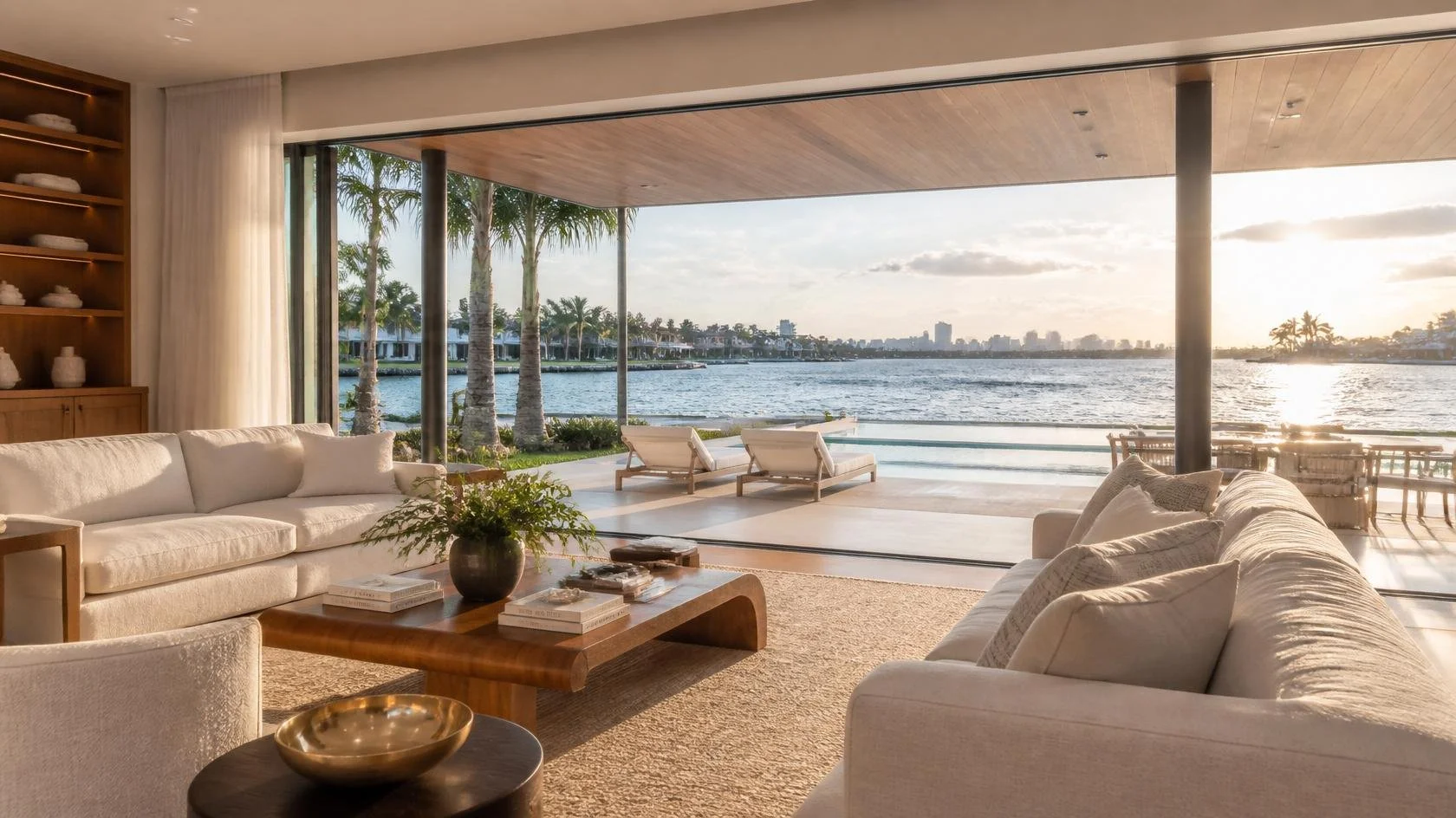
Storm protection, designed in — not bolted on
Krissy Rey Design integrates impact windows, architectural shutter systems, and protected furnishings into the design phase itself, giving Boca Raton, Delray Beach, and Parkland homeowners storm-ready luxury interiors that never look storm-proofed.
For homeowners in these communities, that means impact windows, architectural shutter systems, and material selections that are specified during the design phase — not retrofitted after the fact as a visible, industrial afterthought. Done well, storm protection reads as part of the architecture: impact glass indistinguishable from standard windows, motorized shutters that disappear into the facade, furnishings and finishes chosen to withstand South Florida's climate from the start.
This is design work, not storm prep. Krissy Rey Design integrates hurricane readiness into the same process that shapes your floor plan, your material palette, and your furnishings — so protection and aesthetics are resolved together, once, by people who understand both.
[Schedule a Hurricane Readiness Design Consultation →]
Impact windows and architectural protection systems
The right protection system depends on your architecture, how often the home is occupied, and how much visible hardware you're willing to live with. In Boca Raton and Delray Beach, where waterfront and golf-course elevations put glass on display year-round, that decision carries real design weight.
Impact windows in Boca Raton and delray beach
Impact windows remain the highest-performing, lowest-maintenance option for architecture-forward homes. Once installed, they're close to indistinguishable from standard glass — no panels to deploy, no tracks to see, no pre-storm routine at all. For homeowners considering impact windows in Boca Raton, premium architectural lines from PGT WinGuard, WinDoor, and ES Windows are the brands most frequently specified for luxury whole-home installations, particularly where narrow aluminum sightlines and floor-to-ceiling glazing are part of the design intent. WinDoor, the architectural luxury tier within the PGT family, is specified for five-star resorts and custom estates throughout Florida and carries HVHZ certification with design pressures well above standard residential requirements.
Expect a planning range of $90–$150 per square foot installed for premium, architectural-grade impact glazing — figures that scale with frame material, glass package, and opening size. This is guidance for early budgeting, not a quote; your actual investment depends on the specific product line, elevation exposure, and scope of your project.
Hurricane shutters in Coral springs and Parkland
Where impact glass isn't the right fit — a phased renovation, a historic elevation, or a budget-conscious wing of a larger project — architectural shutter systems remain a credible, code-compliant alternative. For homeowners researching hurricane shutters in Coral Springs and surrounding communities, the meaningful choice isn't just protection level, it's how much visible hardware the system leaves behind:
Motorized roll-down shutters, often specified with Somfy motor systems, retract fully into a housing hidden above the opening. Deployment is a single button, not a physical task — the closest shutter equivalent to the no-maintenance profile of impact glass.
Bahama and colonial shutters function as daily sun and rain control in addition to storm protection, and are typically selected for coastal and Mediterranean-influenced architecture where they read as an intentional design feature.
Accordion shutters remain the most cost-efficient, code-approved option, closing in minutes with no panels to store. The trade-off is visible aluminum tracks flanking every opening year-round — a real consideration on an architecture-forward home, though custom powder-coating in a trim-matched color meaningfully softens the look.
Realistic planning ranges run $25–$60 per square foot for motorized and architectural-grade shutter systems, with accordion systems typically landing toward the lower end. For a luxury home with 12–20 significant openings, total protection investment — windows, shutters, or a mix of both — commonly falls between $150,000–$400,000+ for full impact-glass replacement, or considerably less for a shutter-based approach on select elevations.
All systems specified for South Florida must carry Miami-Dade County NOA (Notice of Acceptance) or Florida Product Approval to meet High-Velocity Hurricane Zone code. Beyond code compliance, covering every opening on the home with an approved system is also what unlocks the largest wind-mitigation insurance credit — commonly cited in the 5–20% range for partial coverage, and significantly higher when every opening qualifies. Your designer and insurance carrier should confirm current figures for your specific policy and property.
[Schedule a Hurricane Readiness Design Consultation →]
Protecting furniture, art, and collections as part of the design
A storm plan that stops at the windows is incomplete. The interior of the home — furniture, art, collections, outdoor living pieces — needs the same design-phase thinking, and it's where a full-service designer's original material choices continue to pay off long after installation.
Documentation and coverage. Investment-grade art, furnishings, and collectibles are typically documented — photographed, appraised, insured under a scheduled valuable-articles policy — at the time they're installed, not left for homeowners to sort out during an active storm watch. Standard homeowners coverage caps valuable-articles protection well below replacement cost; a separate policy closes that gap.
Storage and climate control. For homes with significant art collections or seasonal occupancy, climate-controlled, storm-rated storage is arranged in advance of peak season — a plan that exists before June, not one improvised during a watch.
Material selection built for the climate. Furnishings specified in marine-grade aluminum, solution-dyed performance fabrics, and moisture-resistant substrates are inherently easier to protect, relocate, and, if necessary, replace than pieces chosen without South Florida's humidity and storm exposure in mind.
A representative scenario: a waterfront home on the Intracoastal in Delray Beach, with a full glass wall facing the water and a curated collection of investment-grade art, was designed with architectural impact glazing and documented, insured artwork from the outset. Because both decisions were made during design rather than retrofitted, the owners' pre-season routine is a single afternoon confirming coverage and securing outdoor furnishings — not a scramble for shutters, storage space, or appraisals once a storm enters the forecast.
Why this belongs in the design phase, not the storm forecast
Retrofitting protection onto a finished home is materially more expensive and more disruptive than specifying it correctly the first time. Shutters added onto a completed facade rarely integrate cleanly; an antique or oversized piece discovered too late to protect in place becomes a loss rather than a plan. The design phase is where window systems, structural anchoring, and material selection are resolved once — correctly — rather than corrected under pressure.
This is where full-service design earns its fee beyond the renovation itself. A designer specifying with hurricane season in mind isn't only solving how a room looks at installation. They're solving how the home performs, and how easily it's protected, every June through November after that — for as long as you own it.
Local considerations: Boca Raton, Delray Beach, coral springs & Parkland
Boca Raton & delray Beach waterfront home design
Waterfront properties along the Intracoastal and canal-front lots in Boca Raton present the highest design stakes for storm integration: expansive glass, elevated flood and wind exposure, and architecture where visible hardware is especially costly to the overall composition. Boca Raton & Delray Beach waterfront home design work typically prioritizes architectural impact glazing over visible shutter systems for exactly this reason — the glass is the design, and it needs to perform without disappearing behind aluminum tracks.
coral springs and Parkland: full-time and seasonal residents
Delray Beach and Parkland span a mix of full-time residents and seasonal or part-time owners who may not be on-site when a storm approaches. For part-time residents, no-deployment solutions — impact glazing or motorized shutters operable remotely — remove the dependency on someone physically closing panels before landfall. That consideration alone often shifts the system recommendation for a second home or seasonal property, independent of architectural style.
The Hurricane Readiness Design Audit
For homeowners unsure where their current home stands, the Hurricane Readiness Design Audit is a focused assessment — not a renovation commitment — covering:
Opening-by-opening review of existing window and door protection against current Miami-Dade and Florida Building Code standards
Insurance gap check, identifying where wind-mitigation credit is being left on the table
Furniture and collection risk assessment, flagging pieces that need documentation, insurance, or relocation planning
Photorealistic renderings showing how impact glazing or shutter upgrades will actually look against your home's existing architecture — so the decision is made from a visual, not a guess
A prioritized recommendation, sequenced by risk and budget, that can move into full design and procurement on your timeline
The Audit is the starting point for most hurricane-readiness engagements, and it's designed to give you a clear, specific picture before any commitment to full-scope design work.
[Schedule a Hurricane Readiness Design Audit →]
Frequently asked questions
Do impact windows really look different from standard glass? In most installations, no. Once in place, premium impact glazing from brands like PGT WinGuard, WinDoor, and ES Windows is difficult to distinguish from standard windows, which is why it's the preferred solution for architecture-forward homes in Boca Raton and Delray Beach.
What's a realistic budget for impact windows on a luxury home? Planning ranges commonly run $90–$150 per square foot installed for premium architectural glazing, with total project investment varying by opening count, frame material, and glass package. These figures are directional; a Hurricane Readiness Design Audit provides a specific range for your home.
Are motorized shutters worth the added cost over manual systems? For seasonal residents and anyone who can't guarantee being on-site before a storm, motorized systems — commonly built on Somfy motors — remove the deployment burden entirely. For full-time residents comfortable with manual operation, accordion or manual roll-down systems can be a more cost-efficient equivalent.
Does hurricane protection actually reduce insurance premiums? Yes, when systems carry valid Miami-Dade NOA or Florida Product Approval and cover every opening on the home. Wind-mitigation credits vary by carrier and by how much of the home is protected — your designer and insurance agent should confirm current figures for your policy.
Can storm protection be added to an existing home without a full renovation? Yes. A Hurricane Readiness Design Audit is built for exactly this — assessing what your home has now and sequencing upgrades by priority and budget, without requiring a full-scope renovation commitment.
Schedule your Hurricane Readiness Design Consultation
If your home in Boca Raton, Delray Beach, Coral Springs, or Parkland hasn't been evaluated for storm-integrated design, the middle of hurricane season is still the right time to plan ahead of the next one — not during it. Schedule a Hurricane Readiness Design Consultation to review your windows, protection systems, and collection with a team that treats storm readiness as design work, not an emergency checklist.